Good
- 4% cashback for every new cardholder, up to $100 a month
- No card, monthly or annual fee
- No FX markup on the Global Card abroad
- Apple Pay and Google Pay on the Global Card
Watch out
- 1% fee on every purchase cuts net cashback to about 3%
- 10% cashback needs the Elite VVIP level, an 800+ M-Score
- Virtual only, with no physical card or ATM access
- Not available in the US, the UK, Canada or Turkey
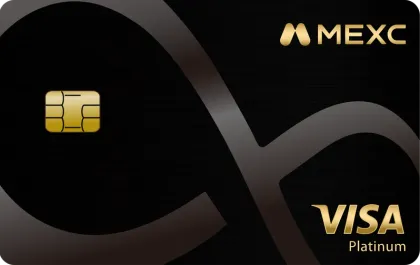
MEXC Card is a free virtual Visa card from the MEXC exchange that spends USDT from your account. Every cardholder starts on 4% cashback, capped at 100 USDT a month, and higher VVIP levels pay 6% or 10%. The Global Card charges 1% on every purchase and adds no markup on foreign currency.
MEXC runs two versions of the card: the MEXC Global Card is open in most countries outside a restricted list, while the older MEXC Card (APAC) is issued in Thailand with a different fee setup, and both share the same cashback tiers. Pick your country at the top of the page and every table below shows the terms for that version.
MEXC Card cashback
MEXC Card pays 4% cashback in USDT to every new cardholder, and 6% or 10% to users with a higher MEXC VVIP level.
The level comes from your M-Score, which MEXC calculates from trading volume, account assets, activity and security settings. New accounts start at 350 points, which is already the Standard level, so the 4% rate needs no staking, fee or minimum spend. Premier needs 600 points and Elite needs 800, and card spending doesn't count toward the score, so the higher rates are really a reward for trading on MEXC.
Each level has a monthly cashback cap, which turns into a spending cap. Standard stops after $2,500 of spending, which is 100 USDT a month at most. Premier pays 6% on up to $5,000 for a 300 USDT ceiling, and Elite pays 10% on up to $8,000 for an 800 USDT ceiling. The rate is set by your level on the last day of the month, so a level held on that day counts for the whole month.
MEXC pays the cashback by the 15th of the following month into your Spot account. Gift cards, money transfers, crypto purchases, gambling and tax payments earn nothing, and MEXC describes the rates as an event that it may change later.
MEXC Card fees
MEXC Card has no card, monthly or annual fee, but every purchase on the Global Card costs 1%, which takes a quarter of the Standard cashback.
On the Global Card the 1% is a transaction fee on the purchase amount, and there is no separate crypto conversion fee. A $100 payment therefore takes 101 USDT from your card balance. A 0% launch offer on this fee ended on September 30, 2026. At the Standard level the maths still works in your favour: $1,000 of monthly spending earns 40 USDT and costs $10 in fees, a net gain of about $30.
Paying in another currency costs nothing extra on the Global Card, because MEXC uses the Visa exchange rate without adding a markup. That makes the card cheaper abroad than many exchange cards, which charge 1% to 2% for foreign currency on top of their other fees.
The card for Thailand swaps the fee around: it charges no transaction fee but takes a 1% crypto conversion fee on each payment, so a purchase in dollars costs the same 1%. The card itself is free on both versions, since MEXC is waiving the Global Card's usual issuance fee.
MEXC Card ATM withdrawal fees
MEXC Card can't be used at ATMs, because both versions are virtual cards with no physical card to insert.
MEXC says a physical card isn't available yet and that it will tell users when one is. Until then, anyone who needs cash has to sell USDT on the exchange and withdraw through another bank card or a local payment method.
Is MEXC Card safe?
MEXC Card is custodial: the USDT you spend sits in your MEXC account, and MEXC holds the keys.
On the Global Card you move USDT from your Fiat account into a separate card balance, so only what you top up is exposed if the card number leaks. The Thai card spends the Fiat account balance directly. Both cards need Advanced KYC with a government ID, a face scan and an address from an eligible country, and you can freeze a lost card from the card page.
MEXC isn't a bank, so card balances aren't covered by deposit insurance. As with any exchange card, it makes sense to keep only spending money on the card and hold savings elsewhere.
Who should get MEXC Card
MEXC Card suits people who already hold USDT on MEXC and spend between a few hundred and $2,500 a month, where 4% cashback minus the 1% fee leaves about 3% net.
That net rate is high for a card with no fee and no staking, and the lack of an FX markup on the Global Card helps people who pay in many currencies. Active MEXC traders gain the most, because a Premier or Elite score from trading lifts the rate to 6% or 10% on far larger budgets.
The card is a poor fit if you want a physical card, cash withdrawals, or a card that doesn't depend on an exchange account. The comparison below shows the strongest alternatives in your country.




Where MEXC Card is available
MEXC Card is open to residents of most countries outside MEXC's restricted list, which includes the United States, the United Kingdom, Canada, China, India, Indonesia and Turkey.
Australia, Saudi Arabia, South Africa and Switzerland accept applications only from users at the Premier level or above.