Good
- No FX fee on payments in other currencies
- Digital card for 15 USDT, with $10 credited back
- Everyday card works with Apple Pay and Google Pay
- No fee on card payments once the card is loaded
Watch out
- No cashback on either card
- 2.5% fee on every top-up
- Virtual cards only, with no physical card on offer
- Card issuer isn't named in PintoPay's terms
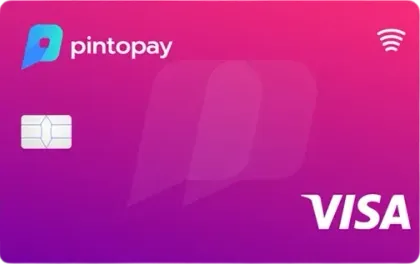
PintoPay Card is a virtual prepaid card you open and manage inside Telegram and load from a USDT balance. The Digital card costs 15 USDT and the Everyday card 35 USDT, each with $10 credited back, and every top-up costs 2.5%. The card pays no cashback but charges no FX fee abroad.
Both cards draw on the same USDT wallet in the PintoPay Telegram mini-app. The Everyday card is the one for daily life, with Apple Pay and Google Pay for shops, cafes and hotels, while the Digital card is a cheaper option meant for subscriptions, AI tools and other online services.
PintoPay Card cashback
PintoPay Card pays no cashback on purchases, on either the Digital or the Everyday card.
The only money that comes back is the one-off $10 credit when you buy a card, which brings the real price of the Everyday card down to 25 USDT and the Digital card to 5 USDT. Referral rewards are also on offer, paid when friends you invite activate a card and start spending.
PintoPay advertises a yield of up to 12% a year on USDT left in its wallet and up to 36% a year in its staking product. Those rates come from PintoPay's own savings products and are separate from the card, so they don't change what you pay when you spend.
PintoPay Card fees
PintoPay Card charges 2.5% when you top up the card, and nothing on the payments you make afterwards, at home or abroad.
Every dollar you spend has to be loaded first, so the top-up fee works like a 2.5% fee on all spending. Loading $1,000 for a month of purchases costs $25, and a $200 hotel booking really costs $205.
The upside is the lack of an FX fee. PintoPay says the fee is taken once at top-up and no extra charge applies when you pay in another currency, which makes the card cheaper abroad than many crypto cards that stack a conversion fee and a 2% FX fee on every foreign payment.
There's no monthly fee, so after the card price the 2.5% top-up fee is the only regular cost on a card you use for occasional bookings.
PintoPay Card ATM withdrawal fees
PintoPay Card is issued only as a virtual card at the moment, and PintoPay doesn't publish an ATM fee for it.
PintoPay sold a physical card in late 2025 that was marketed for cash withdrawals. Since its switch to a new issuing bank in January 2026 the company has offered only virtual cards, and in May 2026 it said physical cards would be back soon.
If you need cash while travelling, plan on a second card that is built for ATM use. The PintoPay Card is meant for paying by phone and online.
Is PintoPay Card safe?
PintoPay Card is custodial: PintoPay holds your USDT balance, and the card is issued by a licensed third party that PintoPay doesn't name.
The service is run by UANT Limited, a company registered in Hong Kong, and PintoPay says it is not a bank and not a card issuer. In January 2026 it moved to a new issuing bank and payment provider, reissued cards, and told users that moving balances from the old bank was taking longer than expected.
The terms give PintoPay wide powers over incoming funds. For deposits worth $2,000 or more it can review the source of funds, freeze the amount while it checks, and in some cases keep up to 10% to cover costs or penalties. A card like this is best used for spending money, with savings kept elsewhere.
Who should get PintoPay Card
PintoPay Card suits people who already hold USDT and want a quick virtual card for paying abroad, especially travellers and remote workers who pay for hotels, flights and subscriptions in several currencies.
The lack of an FX fee is the main reason to choose it. A card with a 1% conversion fee and a 2% FX fee costs 3% on a foreign payment against PintoPay's 2.5%, but only 1% at home, so PintoPay comes out ahead only when about three quarters of your spending is in other currencies.
For spending at home in your own currency, the 2.5% top-up fee with no cashback in return is expensive, and anyone who needs a physical card or ATM cash should look elsewhere. The comparison below shows the strongest alternatives in your country.



Where PintoPay Card is available
PintoPay Card is available through the PintoPay Telegram bot, and PintoPay says the card is used in more than 180 countries.
The terms exclude anyone located in, resident in or a citizen of Hong Kong, and PintoPay can refuse service to people in countries under international sanctions.