Good
- USDT and USDC deposits are free and arrive instantly
- US-issued card, so Argentine card taxes don't apply
- One-off $5 for the virtual card, with no monthly fee
- Works with Apple Pay, Google Pay and PayPal
Watch out
- 1% commission on every purchase and withdrawal
- No cashback or spending rewards
- Physical card only for Bolivian users in a few urban areas
- ATM withdrawals capped at $250 each and $750 a day
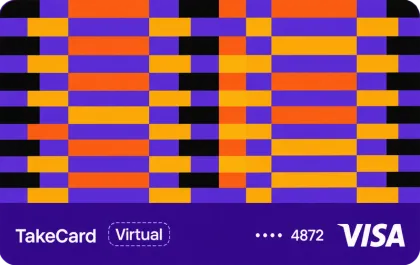
Takenos TakeCard is a US-issued prepaid Visa that spends the dollar balance in your Takenos account, which you can fund with USDT or USDC at no cost. The virtual card costs a one-off $5, every purchase carries a 1% Takenos commission, and the card pays no cashback.
Takenos is a digital dollar account built for freelancers and remote workers in Latin America who get paid from abroad. The card is the way to spend that money online, on subscriptions and while travelling, and because it is issued in the US, Argentine users avoid the taxes their local cards add to foreign purchases.
Takenos TakeCard cashback
Takenos TakeCard doesn't pay cashback or any other reward on purchases, so its appeal lies in access to dollars rather than earnings on spending.
Takenos has a loyalty programme called TAKOS, but its points come from missions and regular use of the app, not from how much you spend with the card. Points are swapped for raffle tickets for experiences, so they have no fixed cash value.
Compared with crypto cards that pay 1% to 2% back, a Takenos user spending $1,000 a month gives up around $10 to $20, and pays $10 in commission on top.
Takenos TakeCard fees
Takenos TakeCard costs $5 for the virtual card and charges a 1% commission on every transaction, with no monthly or annual fee.
The 1% applies to every purchase in any currency, so a $100 purchase costs $101. Takenos says the only charge on purchases abroad is that commission, with the exchange rate set by its card provider. For people in Argentina, that is far cheaper than paying with a local card, which adds national taxes and withholdings to foreign purchases.
Getting money in is mostly free. USDT and USDC deposits from any exchange or wallet cost nothing and arrive instantly, as do ACH transfers from US accounts and deposits in euros, Brazilian reais and several local currencies. Wire transfers cost $25 and SWIFT transfers $35.
Two regional extras apply on top of the commission: residents of San Juan province in Argentina pay a provincial charge of 3% or 10% on international purchases, and users in Bolivia pay a fixed $0.10 on every card transaction under $10.
Takenos TakeCard ATM withdrawal fees
Takenos TakeCard charges its 1% commission on ATM withdrawals, and the ATM owner usually adds a charge of its own, often around $5.
Takenos lets you withdraw up to $250 per transaction, including the ATM owner's fee, and up to $750 a day across at most three withdrawals. On a $200 withdrawal, the Takenos commission is $2, so an operator charge of $5 brings the total to about 3.5%. Takenos advises choosing the local currency option at the machine when you withdraw.
Is Takenos TakeCard safe?
Takenos TakeCard is custodial: Takenos holds your dollar balance and any stablecoins you deposit, and the card is provided through Rain.
Takenos is registered in Argentina as a virtual asset service provider, and it gives users US bank account details through a partner bank in the United States. The card balance isn't a bank deposit, so treat it as money held by a fintech app rather than in a bank account.
Takenos and its card provider can suspend or cancel the card at any time, including on suspicion of fraud, and card disputes go through the provider, which can take 30 to 60 business days. Keeping only spending money in the account limits the impact of a frozen card.
Who should get Takenos TakeCard
Takenos TakeCard suits Latin American freelancers and remote workers who already receive dollars or stablecoins and need a card for foreign subscriptions, online shopping and travel. For Argentines in particular, a flat 1% is much cheaper than the taxes on a local card.
The card is a poor fit for anyone who wants rewards, since it pays nothing back, or for heavy cash users, given the $250 limit per withdrawal and ATM owner charges. Outside Bolivia there's no physical card, so in-store use depends on Apple Pay or Google Pay. The comparison below shows cards that pay cashback in your country.



Where Takenos TakeCard is available
Takenos TakeCard is aimed at users in Latin America, and Takenos accepts customers from any country except those under US sanctions programmes.
The physical card is available only to Bolivian users, with delivery to urban areas of Santa Cruz, Cochabamba, La Paz and El Alto. Everyone else gets the virtual card, which works online and in shops worldwide wherever Visa is accepted.