Good
- Free virtual Visa, no conversion fee on USDC payments
- Self-custody passkey wallet on OP Mainnet
- Pay Later splits purchases into up to 9 installments
- Deposits of USDC, ETH, WBTC, wstETH and OP earn yield
Watch out
- No cashback on any purchase
- No physical card, and cash only from contactless ATMs
- 1.5% FX fee on non-dollar purchases outside the US
- Not available in the EU, the UK or Canada
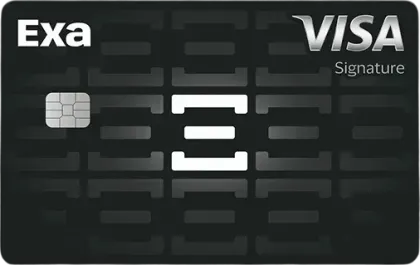
Exa Card is a free Visa credit card that spends USDC from your own self-custody wallet. It has no card fee and no conversion fee on USDC payments, and it pays no cashback. Its selling point is Pay Later, which splits a purchase into up to 9 installments, and yield on the crypto you deposit.
Exa runs two versions of the card. US citizens sign up under separate US terms with a lower FX fee, and everyone else gets the international card.
Exa Card cashback
Exa Card pays no cashback on any purchase, in any country, and has a single free plan.
The money Exa Card puts back in your pocket comes from elsewhere. USDC, ETH, WBTC, wstETH and OP deposited in the Exa wallet earn a variable yield and double as collateral for Pay Later. Other tokens have to be swapped into one of those five first. The yield rate changes with demand, so Exa doesn't promise a number.
The only fixed reward is the referral bonus. A new user who signs up with a referral code gets 10 USDC once their card purchases reach 100 USDC, and the person who referred them gets 10 USDC too.
Pay Later is the other half of the card. Instead of paying in full, you can spread a purchase over up to 9 installments, one every 28 days, borrowed from Exactly Protocol's fixed-rate markets, and the interest is fixed when you buy. Pay Later is a loan with a cost, so it's best kept for larger purchases you can repay on schedule.
Exa Card fees
Exa Card has no card fee and no conversion fee when you pay with USDC, so a dollar purchase costs exactly its price.
The FX fee depends on which version you have. The international card charges 1.5% on purchases in other currencies, and Exa's non-US terms also list a cross-border fee of up to 1.5%. The US card lists a 1% international transaction fee. A $100 purchase in pesos or reais costs $101.50 on the international card.
For anyone outside the US, that FX fee is the main cost. A user in Mexico or Brazil who pays in local currency pays 1.5% on almost every purchase, and with no cashback nothing offsets it.
The US terms add a 2% late payment penalty on Pay Later installments. Card purchases are limited to $10,000 a week before Exa asks for proof of where your funds come from.
Exa Card ATM withdrawal fees
Exa Card works only at contactless ATMs, through Apple Pay or Google Pay, and each withdrawal costs $1 plus 0.65% on the international card.
Withdrawals are capped at $250 each and 4 a day. Taking out the full $250 costs about $2.63 in Exa fees, around 1% of the amount. In another currency the FX fee comes on top, and the ATM owner may add a charge.
Since there's no physical card, check that an ATM has a contactless reader before you rely on it for cash.
Is Exa Card safe?
Exa Card is self-custody: your USDC and other deposits sit in a passkey smart wallet on OP Mainnet that you control, and Exa can't spend them for you.
The card is issued by Third National, with Rain running the card program and Exa Labs SAS, a company in Uruguay, managing the product. Pay Now debits USDC from your wallet at the moment you pay. Pay Later borrows from Exactly Protocol, and your deposits back that loan as collateral.
The risks are the ones that come with any self-custody app. If you lose access to your passkey, nobody can reset it for you, and the smart contracts behind the wallet and the lending markets carry their own risk. Keep only what you plan to spend or borrow against in the wallet.
Who should get Exa Card
Exa Card suits people in Latin America, the Caribbean and parts of Asia who hold USDC and want to spend it without sending it to an exchange first. For someone paid in USDC, a free card with no conversion fee is a cheap way to cover dollar purchases.
The card also fits people who want to split a large purchase into installments while keeping their ETH or bitcoin, as long as they repay on time.
If you want cashback or a physical card, or you spend mostly in a local currency, Exa Card costs more than it returns. The comparison below shows the alternatives in your country.




Where Exa Card is available
Exa Card is available in 45 countries and 31 US states, but not in the EU, the UK or Canada.
The international list covers most of Latin America and the Caribbean, plus Australia, New Zealand, Japan, Singapore, Hong Kong, Malaysia, the Philippines, the UAE and several African countries. Chile isn't on it, and Nigeria is excluded. In the US, the card covers states including California, New York, Texas and Florida. The international terms ask you to confirm you aren't a US citizen.